





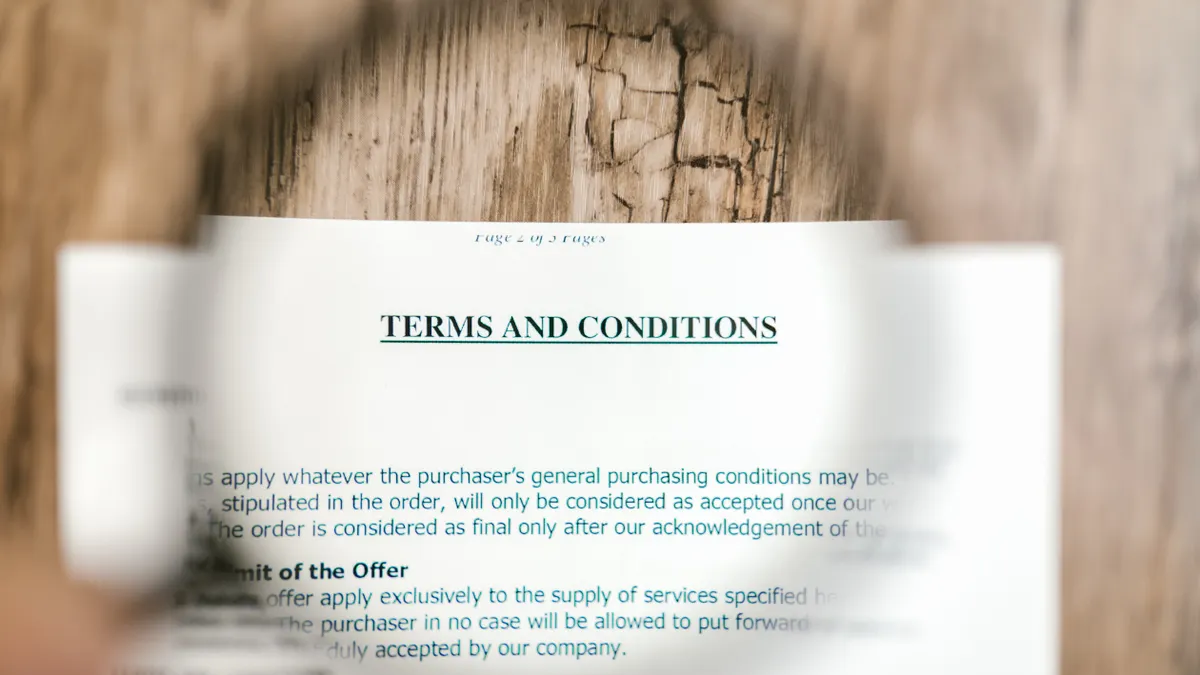
If you publish an affiliate content checklist for compliance and trust signals, the question is not “Can I add links?” It is “What has to be on the page…
Last updated: October 11, 2026
Key Takeaways
- If the page has affiliate links, disclose early and make the recommendation logic and claim checks visible before a cautious reader clicks.
- If you need to explain the disclosure, it is too weak.
- If the page reads like a pitch deck, the trust signals are not strong enough.
- If a claim cannot be checked against a current source, soften it or remove it.
If you publish an affiliate content checklist for compliance and trust signals, the question is not “Can I add links?” It is “What has to be on the page so the reader trusts it and the page stays on the right side of disclosure rules?” In a practical quick answer: at least one clear disclosure, at least one source-backed claim, and at least one comparison point should appear before the first buying prompt. I’d answer that with a checklist: clear disclosure, factual claims you can defend, product comparisons that match the real use case, and enough proof of judgment that the article reads like guidance, not a sales pitch.
What actually has to be on the page?

If the page contains affiliate links, then the disclosure, the recommendation logic, and the claim checking all have to be visible before a cautious reader clicks away. If those three pieces are missing, the article may still rank or convert, but it will not earn trust for long.
The core compliance question is simple: would a reasonable reader understand, at a glance, that you may earn money if they buy through your links? The U.S. FTC’s endorsement guidance is the standard most publishers know, and the plain-English version is: make the relationship obvious and close to the endorsement, not buried in a footer. The FTC’s Endorsement Guides are published at the Federal Trade Commission site, and the disclosure should be hard to miss. In the UK, the ASA and CMA expect the same basic clarity.
Here is the checklist I’d use for the top half of any affiliate article:
- Put a disclosure near the first affiliate link, not just in the footer.
- Name the relationship in plain language: “I may earn a commission if you buy through my links.”
- Match the recommendation to a real use case, not “best overall” by default.
- Show the downside of the product, model, or service.
- Avoid unsupported superlatives such as “best,” “fastest,” or “#1” unless you can defend them.
- Keep the affiliate link label honest if it is shortened or masked.
- Make comparison criteria visible: price, features, warranty, size, compatibility, or support.
- Separate editorial opinion from sponsored placement.
- Check claims against the manufacturer’s current spec sheet or support docs.
- Keep screenshots, model numbers, and version names current.
A generic article stops at “add a disclosure.” That is not enough. The page also has to prove that the recommendation came from a real decision process. For guidance on making endorsements clear, consult a compliance professional if the category is regulated or the rules are changing, and compare your wording with the FTC’s guidance.
| Situation | Best Path | Why Other Options Fail |
|---|---|---|
| Product review with affiliate links | Place a clear disclosure near the first link and repeat it before any buying prompt | A footer-only note is too easy to miss |
| Comparison page | Show criteria and trade-offs in the table itself | Vague “top picks” language sounds salesy |
| Deal roundup | State whether prices can change and avoid exact savings claims unless current | Old discounts create trust problems fast |
| Brand-sponsored page | Label the sponsorship plainly and keep affiliate links separate if both exist | Mixing sponsorship and affiliate income without clarity confuses readers |
Quick check: if a skeptical reader lands on your page and scrolls 10 seconds, can they tell who paid whom and why you prefer one option over another?
Is your disclosure clear enough to pass the sniff test?
If you have to explain the disclosure, then it is too weak. A short, plain note is often the safest choice when it is placed where the reader sees it before acting.
A strong disclosure does three things in one or two sentences: it says you may earn a commission, it says that cost does not change the reader’s price in the usual setup, and it signals that the links help support the work. I would keep the wording blunt. Something like: “I may earn a commission if you buy through links on this page. That does not change your price.” That is not fancy, but fancy is exactly what gets people in trouble.
If you publish across email, YouTube, social pages, and blog pages, the format changes but the rule does not. The disclosure must travel with the endorsement. A blog footer is not enough for a social caption. A spoken disclosure at the start of a video beats a tiny on-screen note that appears for 2 seconds. For podcast-style content, the same logic applies: a reader should not have to hunt.
The two most common mistakes are hiding the disclosure and making it sound apologetic. “Support this site” can work as a secondary line, but it should not be the only line. “This article contains affiliate links” is useful, but I would pair it with a plain statement of what that means. Readers do not need legal drama. They need clarity.
Use this step-by-step process before publishing:
- Place a disclosure above the first commercial link or immediately beside it.
- Use plain words like “commission,” “affiliate link,” or “I may earn money.”
- Match the disclosure to the medium: page, email, video, or social caption.
- Check that the disclosure is visible on mobile without extra taps.
- Read it once as a skeptical stranger: if it feels slippery, rewrite it.
- Confirm that the disclosure is not contradicted by a “best free” or “no cost to you” claim elsewhere on the page.
A generic article often forgets mobile. On a 360-pixel-wide screen, a disclosure that looks fine on desktop can disappear under the fold.
Quick check: if I removed the footer from your page, would the reader still understand the affiliate relationship before clicking?
How do you show trust without sounding like a salesperson?

If your page sounds like a pitch deck, then the trust signals are not strong enough. The most credible pages usually talk about limitations, trade-offs, and fit.
Readers trust affiliate content when the page behaves like a decision aid. That means the article answers, “Who should buy this?” just as often as it answers, “Why this looks good.” A page that only lists benefits is not a guide; it is an ad in a trench coat.
I would build trust signals around three categories:
- Specificity: model names, materials, compatibility, support terms, or plan types.
- Limits: who should skip it, what the product does poorly, what situation makes it a bad fit.
- Comparative judgment: why one option beats another for a narrow use case.
For example, if you are recommending a wireless router, “fast” is weak. “Wi‑Fi 6 support, WPA3, and a 2.5 GbE port” is stronger. If you are recommending software, “works for teams” is weak. “Exports to CSV, offers SSO on the higher tier, and keeps a 30-day activity log” is stronger.
The trade-off is that honest pages sometimes convert a little less in the short run. That is fine. A page that pushes the wrong product will get clicks and lose confidence. I would rather lose a few impulse buyers than publish an article that reads like it was written by an affiliate feed.
Use the following order when writing each recommendation:
- State the use case first: beginner, budget buyer, advanced user, or enterprise team.
- Name the product and the exact model, plan, or version.
- Give the strongest reason to consider it.
- Name the main drawback in one sentence.
- Say who should not buy it.
- Compare it to one credible alternative, not five vague ones.
- End with the buying condition that makes it the right call.
This is where a generic article usually fails: it treats criticism as disloyal. It is not. A page with no criticism is suspicious. If the topic is finance, health, or legal advice, consult a qualified professional before publishing the recommendation language and cite the relevant regulator or professional body.
Quick check: if a reader wants the downside first, can they find it without hunting?
Which claims need proof, and which ones need to go?
If a claim cannot be checked against a current source, then it should be softened or removed. That is especially true for performance claims, price claims, and “best” labels.
I would treat these claims as high-risk:
- Claims about speed, battery life, durability, or output
- Claims about “best,” “top-rated,” or “#1”
- Claims about savings, discounts, or fees
- Claims about compatibility with specific devices or platforms
- Claims about policies, guarantees, trial periods, or support windows
The safest habit is to anchor factual statements to the manufacturer’s product page, the retailer’s current listing, or the official policy page. For standards and compliance topics, I would point readers to primary sources such as the FTC’s Endorsement Guides or the UK Advertising Standards Authority. If your content touches finance, legal, or health products, a professional-consultation hedge is smart because the edge cases matter and the rules can change.
When the evidence is weak, change the sentence. “This is the best value” becomes “This is a strong fit if you want X at a lower entry price.” “It lasts all day” becomes “The maker rates the battery for a full day under stated conditions.” That may sound less exciting, but it is much safer and usually more believable.
Here is a simple rule: if the claim would be embarrassing to lose in a fact check, either source it or cut it.
- Mark every sentence that contains a number, a superlative, or a promise.
- Check whether it comes from a primary source such as the brand, regulator, or standards body.
- If it does not, rewrite it as a comparison, not a fact claim.
- If the page includes a price, add a freshness cue such as “prices change often.”
- Remove old screenshots if the model, layout, or terms have changed.
- Do one final read on mobile and look for stale dates, expired promos, and broken promises.
Quick check: if a reader challenged any bold claim on your page, could you point to a current, specific source?
What should an affiliate content checklist include before publish?
If you want a practical affiliate content checklist for compliance and trust signals, it should cover disclosure, claims, context, and maintenance before the article ever goes live. A page can be clean at first and stale six months later, so the checklist has to include updates too.
My checklist would look like this:
- Disclosure sits near the first affiliate link.
- The page says what the recommendation is for.
- The page says what it is not for.
- Product names, model numbers, and plan names are exact.
- Claims are either sourced or phrased cautiously.
- Comparison criteria are visible.
- At least one alternative is named honestly.
- Images, screenshots, and pricing are current.
- Links go to the correct landing page.
- The article notes any material sponsorship or sample relationship.
- Editorial judgment is separate from paid placement.
- The page has a review date or update cadence, even if it is not numerical.
If I were publishing a buying guide, I would also add a maintenance pass every 30 to 90 days, depending on how fast the category changes. Tech, software, and travel deals tend to age faster than household goods or books. That is not a hard law; it is practical triage.
Here is a simple workflow for the final edit:
- Read the intro and confirm it states the reader problem in one sentence.
- Scan for the first affiliate link and verify the disclosure appears before or beside it.
- Check every comparison table row for a real difference, not filler.
- Open every outbound link and confirm the destination still matches the text.
- Look for unsupported absolutes such as “always,” “never,” or “best.”
- Confirm that the conclusion tells the reader when to buy and when to skip.
The common mistake here is treating compliance as a legal footer task. It is really an editorial task. Good editing catches more risk than a disclaimer ever will, and internal links to your editorial standards, disclosure policy, or review process can help readers verify that approach.
Quick check: if the article were updated by a different editor next month, would the checklist still tell them what to verify?
When the standard advice is wrong
If your article is a niche roundup, a regulated category, or a fast-changing deal page, then standard affiliate advice is not enough. Those cases need tighter wording, faster updates, and a narrower promise.
Here are the edge cases that break the usual rules:
-
You are covering regulated products.
What changes: claims can trigger legal or platform review.
What to do instead: keep the language descriptive, avoid outcome promises, and add a professional-consultation hedge where appropriate. -
You are listing daily deals or coupons.
What changes: prices and terms expire fast.
What to do instead: use a visible update date and avoid exact savings claims unless they are current on the page. -
You are comparing nearly identical products.
What changes: the difference is often one feature, warranty term, or ecosystem fit.
What to do instead: build the whole article around that single difference instead of pretending the products are radically different. -
You are publishing on social or video first.
What changes: the disclosure must be spoken or placed where it is immediately visible.
What to do instead: put the disclosure in the first lines or first seconds, not in a description nobody opens. -
You have a sponsorship plus affiliate links.
What changes: the reader is dealing with two incentives, not one.
What to do instead: label both relationships plainly and keep editorial judgment separate from paid placement. -
You cannot verify a claim from a primary source.
What changes: the article becomes a liability if the claim is wrong.
What to do instead: remove the claim or qualify it tightly and compare only what you can verify.
These cases matter because the generic advice—“disclose and be honest”—is too thin. The more sensitive or fast-moving the category, the more the article has to behave like a careful reference, not a hype machine.
Quick check: if your content fits one of these edge cases, are you using the stricter rule set instead of the normal one?
FAQ
If you are still unsure, these are the questions I would expect a careful editor to ask.
Do affiliate links always need a disclosure?
Yes. If a reader could reasonably think your recommendation is fully independent, the relationship should be disclosed clearly and near the first link.
Drafted with AI; not yet reviewed by a person.